Tuesday, October 30, 2012

Love: the Syllabus (Part 2)


I've been thinking a bit more about my senior seminar on "The Nature and Culture of Love," ENG 390, and particularly about how it might compare to that capacious course at Brown.

My impulse seems to be to start with a unit that asks why and how and for whom love might be thought of as a "problem."  (Which is to say, I suppose, to "problematize" love, although that sounds dreadful.)  I'm thinking here of classic feminist challenges to the ideal of romantic love, like those by Simone de Beauvoir and Shulamith Firestone and Adrienne Rich (the poem "Translations"), and also of more recent readings like Chuck Kloesterman's "This is Emo" (from Sex, Drugs, and Cocoa Puffs), which is about the dangers posed to the essayist and his various love interests by their investment in what he calls "fake love":  the kind purveyed by romantic films and novels.  

From there we could move into some works of nonfiction.  My impulse here is currently to avoid the natural sciences, since I don't feel confident that I can really choose good work on the neurobiology, say, of love, and I don't want to lead students astray with things that are reductive or unreliable.  (An alternative might be to "teach the conflicts," as they say, with some excerpts from a variety of sources.)  One source that's been recommended to me several times, however, is A General Theory of Love by Thomas Lewis, Fari Amini, and Richard Lannon, which was written for the general public and seems pretty engaging.  If any of you have other suggestions, I'd be glad to hear them.

The other non-fiction books I'm considering are David Shumway's Modern Love:  Romance, Intimacy, and the Marriage Crisis and Eva Illouz's Consuming the Romantic Utopia, perhaps with a chapter or two from Why Love Hurts on the side.  Illouz is a sociologist, while Shumway does cultural studies with an emphasis, in that book, on film, fiction, and advice columns.  I'm up in the air about Simon May's Love: a History, which is philosophical and touches on theology, for reasons I'll get to in a minute.

Now, alongside those non-fiction texts I'm trying to think of the right set of romance novels.  Crusie's Bet Me has the science in it, and fairy tales, and pop culture, and any number of other discourses--but it's also a book that I've taught many times before.  My impulse right now is, if I teach a Crusie novel, to teach Fast Women instead.  It's written in homage to two novels by Dashiell Hammett, The Thin Man and The Maltese Falcon, it has some interesting poetry in it, and it's a very serious book, I think, about marriage and divorce, all of which seem to recommend it to senior English majors.  Some of my students might have taken the DePaul course on film noir and hardboiled fiction, so they'd have a natural point of entry even if they're not romance readers, and of course we could look at the films of those two Hammett novels as points of comparison also.

Two other novels I'm considering are Natural Born Charmer (which pairs very well with the Illouz and with the discourse-analysis approach in the Shumway) and Victoria Dahl's Real Men Will, which taught nicely last winter and includes some advice columns and didactic passages that make it an interesting fit with the Shumway as well.  

There's a part of me that wants to teach Redeeming Love in this class, because it's such an interesting book to look at closely and intertextually, and English majors should be good at that.  On the other hand, if I do teach Redeeming Love, I have to include either the Simon May book or some equivalent--something to give students tools for discussing love theologically, and also (Christian) theology of love.  

That's all good stuff...but it fills up the class, so that there's less time for each reading and topic.  Not sure if the trade-off is worth it.  

Finally, there are some other novels that have been suggested to me:  Ann Herendeen's Phyllida and the Brotherhood of Philander (which teaches well to English majors, and is all about different sorts of love and love-culture), Cecelia Grant's A Lady Awakened, Radclyffe's Fated Love, and more.  

So many novels, so little class time! 

Saturday, October 27, 2012

Love: The Syllabus

There are plenty of courses out there about love.  A quick search pulls up dozens of syllabi, from any variety of disciplinary and interdisciplinary perspectives.  As I think about my own upcoming class, I've spent some time looking at one particularly ambitious and interesting course, "The Study of Love," which was held at Brown University last year.

The course website includes a blog and a lot of links, as well as a detailed syllabus.  Stepping back for an overview, it looks like the course progressed through a series of ten topics, several of which got more than one week of classes.  (It's a semester course, not a quarter, like one of mine.)  Here's the list:

  1. Attraction and "Courtship" 
  2. Dating and Hook-Up Culture
  3. Falling in Love
  4. The Experience of Love:  Attachment and Love as Madness
  5. Love as a Story
  6. Love in Popular Culture
  7. Love Across Borders
  8. Sex
  9. Love in the Postmodern World
  10. Marriage and Monogamy

Several of the units mix scientific, social-scientific, and humanistic perspectives:  for example, one class day on "The Experience of Love" includes the following readings:


  • “Acute effects of cocaine on human brain activity and emotion” Brieter
  • “Pathological love: impulsivity, personality, and romantic relationship” Sophia et al.
  • “Sexual addiction, sexual compulsivity, sexual impulsivity or what? Toward a theoretical model” Bancroft & Vukadinovic,
  • “Personality characteristics of sexual addicts and pathological gamblers” M Raviv.
  • DH Lawrence, "The Mess of Love"
  • Stendhal, On Love (the famous passage on "crystallization")


All in all, as I say, it's a very ambitious syllabus--one that gets me thinking what my own set of topics might look like.

Several of the topics jump out at me as ones I could see myself doing, and several give me the opposite impression:  here's something I'd probably avoid.  Among the former, I'd count "Love as a Story" (which had readings from Robert Sternberg's book of that name, along with some Joseph Campbell);  "Love in Popular Culture" (songs, Disney movies); "Love Across Borders," and "Love in the Postmodern World" (feat. Erich Fromm's The Art of Loving and Cristina Nehring's recent Vindication of Love--I can think of some other readings I'd slot in here).  "Marriage and Monogamy" appeals to me also as a topic, perhaps because I feel like I've been thinking about it for the past, oh, 30 years or so.  :)

On the other hand, there are topics here that I'd be a bit uncomfortable doing--not for the content per se so much as for my lack of disciplinary knowledge.  The units on dating and hook-up culture, love as madness, and "sex" (as a stand-alone topic, which seems odd to me) fall into this category, although I suspect that at least the first would be of interest to my students.  Maybe if I had a text to work with?


Thursday, October 25, 2012

"The Nature and Culture of Love" (Syllabus Musings)


I’m going to be teaching another ENG 390 senior capstone next term.  The official title is "The Nature and Culture of Love," but I neglected to turn in a course description for the catalog, so that students would know what the course is about.  Oops!  Oh, well.  The course filled up anyway, with 25 students (8 men, 17 women), which puts me in an interesting position:  a full course for me to play with, in terms of content and structure.  So--what to do?

My original plan for the course was to reframe my work on popular romance fiction as work about the "culture of love," so that I'd have leeway to bring in films or TV shows, advice books or pop songs, really the whole panoply of love-work out there, now and in the past.  The structure I'd planned was to start with an assortment of readings about love and romance (and marriage, perhaps) from various disciplinary perspectives, followed by an in-depth inquiry into one or two primary texts, from whatever medium caught my eye.

As my current courses stagger to the finish line, however, I'm remembering something that I seem to forget whenever I put together a syllabus:  that course teaches best which teaches least, or assigns least, anyway.  The more I try to "cover," the less satisfied I usually am.  And, conversely, the smaller the assigned reading list, the more interesting I tend to find each individual class day.

What does that mean for my seminar?  Well, there are several options I’m considering, and I’m trying to figure out which would be better for me, on the theory that each of them has plusses and minuses for the students, and it's hard to know what's the best fit, in advance.

The first model is to do what I originally planned:  choose a bunch of secondary readings and then focus on one or two objects of inquiry.  I'd have to pick the secondary readings now, and keep myself from assigning too many, as I have with poets in the Love Poetry class.

The second is to do what I did with Laura Kinsale's novel Flowers from the Storm a couple of years ago, but do it with Natural Born Charmer, by Susan Elizabeth Phillips.  We'd spend 10 weeks on the novel:  the first four or five reading it on its own, discussing the various topics and issues that it raises, and the second half of the quarter having students do independent research projects based on those discussions, culminating in papers about the book from any number of perspectives. 

There are some obvious advantages to this approach, for me.  I’m going to be writing about this novel for the book I'm doing on Romance Fiction and American Culture--that will be my essay in the anthology--so I'll get a lot out of sustained focus on the book; likewise, I won't have to do much class prep, week by week, which will free up time for writing.  The problems I anticipate are that some students might not like the book, which can shut down class discussion, that I might have a bunch of LGBT students and / or students of color, and our only love story is a straight white one, which feels a bit sad and limiting, and that students might strike out in some pretty odd directions for their research (as they did for the Kinsale), which means less added value for me.

The third model is to choose four or five secondary sources about love or romance or marriage—books and essays that I’ve liked in the past, or am curious about now, which might give me some ideas to think with—and then spend the quarter reading them, one by one, without a specific "object of inquiry" in mind.  Students would then fan out and find a bunch of those objects, “primary texts” of their own choosing, from songs to films to TV shows to ad campaigns, and write final projects that use ideas from the secondary sources to write about the things that interest themThe advantage of this second model is that it forces me to put the time into doing some of the secondary reading that I’d like to do anyway, like Simon May’s book about the history of love or Eva Illouz’s new book.  The disadvantage is, I’d then be reading those books, plus the books for my other class, a popular romance survey, and that’s a lot of reading—harder to find the time to edit and write.

Option four?  Choose one thinker with a couple of relevant books (say, Eva Illouz), rather than one object of inquiry. Spend half the class getting to know that person's ideas, and then do the fanning-out bit, using them to study whatever catches our eye.  I mention Illouz because I think she's relevant to the Phillips novel, but also because she's someone new in my mind--and I'm learning in the Love Poetry class that going back to someone I've taught for years (like Anne Carson) doesn't seem to be as exciting or interesting for me as reading someone new.  I had a "Kristeva seminar" in grad school that looked like this:  10 weeks on several books by Julia Kristeva, with us students doing the application of the ideas to readings we chose, in conjunction with the professor.  

Thoughts, friends?  From a professorial or student perspective--or just as folks who know me, at least through the blog?


Monday, October 22, 2012

Rainy Days & Mondays

It's a rainy Monday, here in Chicago.  I set aside that second stack of papers yesterday, focusing instead on family life and on preparing for the first rehearsal, this season, of the Alte Rockers, the parody rock band for which I sing and write and play (quite limited) guitar.  The day was sweet, and the rehearsal joyous, with the return of our other male vocalist, David, after a life-threatening spinal condition that took him out for a year.  Still, today I'm paying the price:  an abashed, apologetic return to the classroom, with a day or more of grading ahead.

The interesting thing is, I'm not bothered by the prospect of the grading as such.  To my surprise, I rather enjoyed grading that last stack of papers, typing up my comments in the margins of the on-line submissions.  It's quite like editing essays for my journal, or for a book manuscript, and I find it gratifying--an extension of my teaching.

What bothers me, then, is partly the opportunity cost:  the sense that there are so many other things that also need to be done, which I have to put on hold.  But mostly it's just a matter of feeling that I've let my students down, making them wait so long for their grades.

Now that the promotion is in hand, I'd like to focus a bit more again on my teaching as such--not for the sake of evaluations, which don't matter any more, but because it's something that I'm quite good at, when I give it the time and attention it deserves.  Some of my teaching, back before tenure, was really extraordinary, and of course after tenure I took several years off from writing and really dug down deep, pedagogically speaking, trying out new course structures and assignment models, all of which I seem to have forgotten or abandoned.  (The older I've gotten, the more I seem to lecture, which is a problem, I think.)

In short, I could be doing better, in all of my classes, and I suspect that the more I find a way to focus on them as a priority, the happier I'll be, even when grading, even on rainy Mondays.


Sunday, October 21, 2012

Where have I been?

Where have I been?  Well, in the past week, in addition to the usual family stuff, I've

  • wrapped up the latest issue of JPRS
  • Skyped with my managing editor about the next issue
  • written a book proposal for my next co-edited collection (went out to a press yesterday)
  • written a summer research grant proposal 
  • completed and written up an external tenure review
  • had a conference call about the Popular Romance Project
  • had a preliminary songwriting meeting about this year's Alte Rockers parodies
  • taught my classes (Pope, Blake, Whitman, Dickinson)
  • co-taught another half-class with a colleague, on Donne, and
  • graded 25 student poetry essays.
I have another set of essays to do today (and tomorrow, and the next day), and some important emails to write, but basically, I feel good about what I've gotten done, and about how I've felt doing it:  calmer, less frazzled, less frantic.  

In short, the media downshift seems to be working--and to be getting easier, more self-sustaining.   

Let's see what the next week brings.  

Sunday, October 07, 2012

Media Detox

It's going on a couple of weeks since I stepped away from Twitter and Facebook, deactivating my accounts.  I've gotten a half-dozen anxious emails from friends who couldn't find me there, some of them wondering whether I was OK, others worried that something they'd said or done had driven me away.  Once they found out why I was gone, though, they all said some variation of "Good for you!" or "Gee, I wish I could do that."  An interesting reaction.

After last Wednesday's presidential debate, I added a new twist to my media detox.  Since my wife and kids are all avidly keeping up with the polls, the pundits, and the news, I decided that I didn't have to check them myself as well.  This would free up even more time for me--News and Opinion was the second of three big categories of Distracting Time in my RescueTime weekly summaries--and it would give me something interesting to talk about with my family, since we wouldn't all have read exactly the same sites, day after day, all day long. It also helps with the general anxiety I've been feeling about the election, which I can't much influence at this point, living in a solidly Democratic state and not having much money to donate.

What's been the impact of this shift, you ask?

The first few days without Twitter and Facebook were hard, but now, I don't really miss them, and I'm slowly losing the habit of thinking in tweets & status updates.  My fingers still start typing those site addresses when I get restless or bored with something else I'm doing at the computer, as they do the news / opinion URLs, but they're easy enough to stop--and it's a helpful reminder, each time, of how much of one's life is lived by habit.

The funny thing is, when I don't type one of those addresses in, I find myself standing at the keyboard puzzled, trying to think--sometimes pretty hard--of what I want to look at on line.  Are there any sites I want to read?  Anything I want to learn about?  It's a fascinating experience, this loss of pattern and habit.  I'm quite enjoying it.

The final leg in the Distracting Time tripod--weird metaphor, but maybe that makes these sites the stool that I've been sitting on to rest from work, or something like that--is the set of musical instrument sale sites I look at:  Ebay listings, the classified ads at Mandolin Cafe and Craigslist, the lists of newly arrived instruments at a couple of shops in town, etc.  I don't actually buy anything at any of these, mind you, nor do I go to the shops and play things.  I just window shop, see what's new, think about what I could buy and picture myself playing it--always better, of course, than I can actually play any instrument in real life.  It's very soothing, this sort of search:  the mental equivalent of sucking my thumb or ticking through worry beads or something like that.

I don't feel the same urge to cut this out entirely that I did the other two sorts of sites, because this doesn't cause me as much stress--but I'll be curious to see whether I spend more or less time on them now than I did when they were part of the overall mix.  When I think of it, I'm trying to replace them with sites or YouTube videos that teach me how to play something:  a song I like, a riff I've always enjoyed, etc.  You see, when I do go to an instrument shop, I'm always a bit intimidated by how little I know how to sit down & play off the top of my head.  It would be nice to change that.  But that's a post for another day, I think.

Sunday, September 23, 2012

In the Narrows

Back in June, at the start of my summer break, I decided to take a break from social media.  It didn't last long.  My grandmother's death had me clicking back over to Facebook to post about her and connect with family, and I never looked back.

The impulse or insight behind that decision, though, has continued to haunt me.  Although I spend more and more of my time on line, less and less of that time is spent reading blogs and newspapers and other food for thought.  Instead, I obsessively check Facebook (and, to a lesser extent, Twitter) to see what other people have posted links to or comments about--but I don't, then, follow the links.  I just note and move on.

Even more troubling, I've noticed that my attention span for reading off-line, whether it's a newspaper or a work of non-fiction, has shrunk considerably.  I'm now in the mental habit of clicking, darting from site to site, headline to headline, bit to bit, and even this among a shrinking number of sites.

As of this morning, then, I'm starting an experiment.  I've deactivated my Facebook and Twitter accounts, and am going to see if I can keep them inactive for a few weeks, at least, and just see what happens, how it feels, what I do instead.

In order to stay in touch with people, I've reactivated the comments at my other blogs, and of course there's always email.

It's just...I feel like there's something wrong with my time allocation these days.  Hours slip away, days slip away, and much of my professional mojo is gone.  I don't know that social media are to blame, but think at some point they started to be problematic, and the methods I've been using to try and rein in my use seem not to be working on that deeper, neurological-habit level.

To be honest, part of me feels really bereft without those accounts:  cut off, isolated, like I'm talking here into the void (as opposed to posting on a common wall where my friends and "Facebook friends" will see and might respond).  But as I say, let me give this a few weeks, and we'll see what happens & how I feel.


Tuesday, September 04, 2012

And away we go!

First day--not of school, exactly, but of the school year, work-wise.  Which means I'm here at the office, polishing up the syllabi and making sure that things are copied and scanned and ready for action tomorrow.

It took me just under an hour to get here, and I suspect that this will be the norm throughout the quarter.  Minimum of four hours on the road a week for the next ten weeks, and probably a good deal more.  Need to plan for that, in terms of things to listen to in the car.  Suggestions are welcome; for now, I'm working on a bunch of Blur, per my son's recommendation.  (He's trying, bless his heart, to improve my musical taste.)

***

I've spent the last two hours getting my Love Poetry syllabus ready.  It's maddening--I have an eight-inch stack of files that I've used for the class over the years, none of them properly organized or actually useful.  Oh, well!  No time like the present to get them straightened out, or at least to start.  I've been shuttling back and forth to the department secretary all morning, asking her to make pdf files of things so that I can store them electronically and recycle the actual paper.

Oy, so green I'm getting!  "Annihilating all that's made / To a green thought in a green shade."

***

Forced myself to take a walk this afternoon, before lunch and student meeting.  I start the school year feeling harried, perhaps inevitably so, but I want to push back against that, and walking every day with R has been one of the joys of the summer.  Alone it's not so pleasant, but it's better than standing around my office fighting off the Big Chill.

(They have the air conditioning cranked down to about...I don't know.  68 degrees?  Sweater weather.  Crazy, when it's muggy and summer outside.)

***

Woke up from a nightmare--my mother in law coming for a two week visit!--and as I hit the shower, a fragment of a poem floated into my mind.  A rhythm, a phrase, an off-rhyme...that's all it comprised, and it wasn't even both halves of the rhyme, just the fact that "was" was rhymed with some word a longer "a" and proper "s" sound to it, like "pass" or "grass."

Haunted me all day, that.  Which I've enjoyed.  It's been a long time since a poem had that effect on me, and I've missed it.  Anyway, by the time I got to work, I'd remembered that there was a "she" in the poem, and with a little help from Google, I found the passage.  It was the final couplet of the final stanza of Donne's "The Relic," a poem I mostly know from teaching A. S. Byatt's novel Possession: a Romance, ages ago.  Here's the stanza--you can find the rest of the poem here, if you want to read it.

First we loved well and faithfully,
            Yet knew not what we loved, nor why;
            Difference of sex we never knew,
            No more than guardian angels do;
                Coming and going we
Perchance might kiss, but not between those meals;
                Our hands ne'er touch'd the seals,
Which nature, injured by late law, sets free.
These miracles we did; but now alas!
All measure, and all language, I should pass,
Should I tell what a miracle she was. 

I don't know what I'd say about that in a class this afternoon, but I take its sudden surfacing as a good omen for my poetry teaching this fall.


Monday, July 30, 2012

Love Poetry...Purgatory?

Getting there.

I've spent most of the day checking old syllabi and tinkering with the list of authors.  I'm thinking now that I'll cut back on the secondary reading, and try to pump up the non-Western aspect of the class just a bit, but not jettison the overall chronological structure, which always gives students a handle on the material.

Here's where I am right now with the list of authors and weeks:


Week 1:  Introductions

Wednesday:                Introduction to the class and to each other. 


Week 2:  Classical Foundations


Monday:                      Sappho, Eros, and the origins of the “Idealist” love tradition.  Read the Sappho poems and fragments posted on D2L.

Wednesday:                 Ovid; origins of the “Realist” tradition.  A selection of the "Amores" and all three parts of “The Art of Love.”

Week 3:  Jewish / Christian / Muslim Foundations


Monday:                      The Song of Songs as love song and allegory; the origins (perhaps) of companionate love.  Read pp. 3-131 in your edition, and browse the pages of line-by-line commentary when you find passages you particularly like. 
Wednesday:                 Ibn Arabi, Stations of Desire.  Read the Introduction and the poems on pages 53-75 and 105-138.  Consult the glossary in the back as you read, for helpful definitions.  (Or maybe Ibn ‘Arabi and Rumi, the "two oceans," instead.)

Weeks 4-5:  Cultures of Love


Monday                       Dante, Vita Nuova; Canto 5 of Inferno, and perhaps other parts of the Divine Comedy (by handout)

Wednesday                  NO CLASS:  Professor in UK

Monday                       The Age of Beloveds (a fascinating book about Ottoman and European love poetry, from Venice to London, during the "long 16th century"--and a chance to learn how to read and situate poems in historical / cultural contexts, to think about the uses of love poems, as well as their ideas and aesthetics)
Wednesday                  The Age of Beloveds, continued.

Weeks 6-7:  The Companionate Revolution

Monday                      Donne
Wednesday                 More Donne

Tuesday 5/2                Bradstreet, early American love poems, Whitman
Thursday 5/4               Dickinson

Week 8:  Modern(ist) Love

Tuesday 5/16              Cavafy
Thursday 5/18             Rilke 

Weeks 9-11: Love and Revolution

Tuesday 5/23              Surrealists
Thursday 5/25             Faiz

Week 10:  Love and Politics

Tuesday 5/30               Darwish
Thursday 6/1               Rich

The week I'm least comfortable with at the moment is week 8, which reduces Modernist Love to two poets, although we get a handful more in the sheaf of Surrealist work in the following week.  Still, I'm torn between really getting to know Cavafy and Rilke (which is a joy) and introducing students to a wider range of Modernist poets, including several female ones.  And I'm thinking of leaving a slot open for another poet, just in case.  

But it's a start!

Love Poetry Hell

I've spent the last few hours in Love Poetry Hell.

Once upon a time, you see, I taught a comp. lit. class on Love Poetry here at DePaul.  To be specific, it was called "Love Poetry: the Western Tradition," because I wanted to leave room to apply for an in-house grant to study non-Western love poetry and create a new course on the topic. More on that anon.

In any case, across the early 2000s I taught the course...oh, seven or eight times, always with more or less the same core set of poets and readings on the syllabus:

Sappho
Ovid
the Song of Songs
Dante and / or Petrarch
Donne
Milton
Whitman
Dickinson
Cavafy
a suite of Surrealists

These were usually joined by some secondary readings from Anne Carson's Eros, the Bittersweet and Octavio Paz's The Double Flame.  Some years I added poems by Ibn 'Arabi and St. John of the Cross; some years, when I had enough class days, I found room for a suite of "Scoffers and Debunkers" and even, when we met three times a week, for class presentations on poets of their choosing.

Why the hell?  Well, this fall I'm teaching the course again--and I find the earlier format simultaneously attractive and frustrating.

Attractive, because it always worked:  students learned a lot about new poets and about poets that they've studied elsewhere (Donne, Milton, Whitman, Dickinson) from a radically new perspective.  Frustrating, because the poets and topics that I want to think now about are damnably hard to shoehorn into the syllabus.   I'd like to expand the section on sacred and secular love, since that's a particular interest of mine; I'd like to spend more time on some modernist poets (Auden, Rich, maybe Rilke and / or Neruda); I'd love to do a unit on love songs; and I'd like to put some non-Western poets onto the syllabus, since that grant won't be coming my way any time soon.  In particular, I've thought of adding Mahmoud Darwish, who doesn't get talked about nearly enough, I think, as a poet of love--but to do that, I'd need some Sufi poetry earlier.

Grrr.  Argh.


Tuesday, July 24, 2012

Rilke, Vacations, & Push-Ups

Vacations usually murmur to me what that archaic six-pack said to Rilke:  "You must change your life."  This year, though, the family trip was less inspiring, more confirming:  something's already changing, it said.  Slowly, somewhere, out of sight, you're settling down.  Enjoy it.


***


How many of my students would recognize that reference to Rilke, I wonder?  Back in 2003 I assembled my own anthology of poems for ENG 220 (Reading Poetry), organized more or less historically, running from Sappho (in translation, of course) to the present, with Rilke in the mix.  The idea was to teach an "Introduction to Poetry" course that reached outside the Anglo-American tradition, giving students a bit more cultural literacy than they acquire in my usual courses, which emphasize close reading skills. 


Is "cultural literacy" what I mean, exactly?  They learned some of the big names, yes, the reference points--but more than that, they got a whiff, like incense, of the romance of poetry.  That was the plan, anyway.


Like most of my more innovative syllabi, this one got abandoned at some point.  I don't remember why.  Maybe I should try it out again.


***

Archaic  Torso  of  Apollo
Rainer  Maria  Rilke
Translated  by  Stephen  Mitchell                                        

We cannot know his legendary head
with eyes like ripening fruit. And yet his torso
is still suffused with brilliance from inside,
like a lamp, in which his gaze, now turned to low,

gleams in all its power.Otherwise
the curved breast could not dazzle you so, nor could
a smile run through the placid hips and thighs
to that dark center where procreation flared.

Otherwise this stone would seem defaced
beneath the translucent cascade of the shoulders
and would not glisten like a wild beast's fur:

would not, from all the borders of itself,
burst like a star: for here there is no place
that does not see you.  You must change your life.
That's not quite rhythmically steady enough, in English, to use for counting push-ups--not like Blake's "The Tyger," for example, which I've blogged about elsewhere.  

Still, it could be motivating.  I'm getting more archaic by the day!

Tuesday, June 26, 2012

Summer Goals, Summer Fretting, Summer Musings

I've decided to hold off on the big scary project--Writing My Book--and focus instead on the smaller projects immediately at hand:  revising my Bollywood essay, expanding my piece on romance fiction and poetry, editing the Romance Fiction and American Culture anthology, and writing my own contribution to  that collection, which will be the expanded version of my IASPR conference paper from last summer.  Alongside, you know, all the other stuff (conference organizing, JPRS, family matters), those are my summer goals, while I keep a a catchall file somewhere on the computer where thoughts about Das Book will go.

My thought is that this strategy will keep these projects from seeming like roadblocks or distractions from what I "ought" to be doing, and will loosen me up a bit for the more peripheral, playful thinking that will need to go into DB.  Trying to hack my moods a bit, so that I don't begrudge the time I spend on any individual effort.

And, to be honest, as long as I'm writing something connected to my research, I'm happy.  It's the extended periods of only editing, or writing nothing but reports and emails, that gets me down.

***

Speaking of which, I recently got this as an auto-reply email:

"Your email has landed safely in my inbox.  I am offline editing and writing.  I will be checking from time to time so please be patient."


Why does it never occur to me to send out a message like that?


***


One thing I've started to learn this summer:  there's a particular feeling of mental restlessness, coupled either with generalized unhappiness or a recurrent set of mental "scripts"--arguments with person X or quarrelsome thoughts about topic Y--that I've learned to recognize as a sign that I really need to sit down and shut my eyes for 20 minutes...which often turns into an hour.  And, since it's the summer, I often can act on that realization.  Unbelievable luxury, this.  


***


It's been a while since I've read a book of essays that I've enjoyed as much--or that's gotten me thinking as gratefully--as Charles Bernstein's Attack of the Difficult Poems.  I don't always agree with it, or even quite know what he's saying, in practical terms (i.e., how I'd use his ideas in my classroom or what the student work-product would then look like), but the liveliness of thought and expression here are really welcome, and by no means guaranteed in either academic or literary writing, nowadays.  I'll post some quotes as the summer goes by.


***


My son's been getting me up to speed on some of his favorite music as we drive off to school in the morning.  Here's one that I enjoyed the other day, by the Arctic Monkeys.  Me, I'm off to nap.


Thursday, June 21, 2012

It Makes No Difference

First off, thanks to my new reader (yay!) for joining the fun.  I don't blog much about poetry these days--a topic which I might post about at some point this summer--so if you're looking for posts on poems, you'll need to scroll down a bit.  Or just stay tuned.  You never know what's coming.  I sure don't!

My title today comes from a song by The Band that I heard on the radio yesterday, which sparked some rueful musings about the effects of my recent promotion.  For your listening pleasure, here's the song, in a lovely, low-key cover version, with musings below:


So, about the difference-making, or the lack thereof...

I'm struck, as the summer begins, by how little my daily life changes thanks to what was, in anxious anticipation, such a big, big deal.  Had I not gotten the promotion, I'd be pretty miserable, but it's hard to notice an absence--and day to day, hour by hour, I'm still doing exactly what I did before the news came in. Mostly, that's editing, email, and organizational work, whether for IASPR / JPRS or for the Popular Romance Project, where I curate the "Talking About Romance" blog. I have one last book that I'm editing before that side of my research is done, at least for a while, so there are essays that I need to read and evaluate from those contributors, draft blog posts for the Project to read over, and pieces in the submissions queue--and the readers' reports queue--for the journal. I'm also involved in planning the upcoming 2012 IASPR international romance conference, after sitting out the planning stages of the last two of them.

So as I say: editing, email, and organizational work. 

Add some fun to that--a whole lotta Zumba going on--and then some less-fun family commitments, what with the recent deaths of my 104-year old grandmother and one of my wife's uncles, and her father's ongoing heart troubles, and we have a fullish day, then another, and the next thing you know, it's been a week.

(Those heart troubles are worrisome.  More on them anon.)

All in all, that's not a bad or unproductive way to spend a summer. And lord knows I spent the spring with plenty of all of that work to do, and a crying need for time in which to do it! But it leaves out writing of my own, and reading, and making music, all of which are things I'd planned to spend time on in the summer.  In particular, I'm worried about my popular romance monograph.  If I don't get started on that this summer...well, I don't know when it's likely to go better, or get easier.

Something, folks, must be done.

Friday, June 15, 2012

Oops.

First off, thanks so much for leaving a comment, Laura!  That's a pleasure in this blog that I've sorely missed.

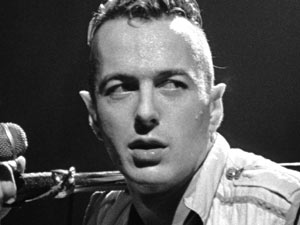
I'd meant to post something substantial, reflective, or otherwise interesting here--or at least a picture of myself with my Yiddishe Joe Strummer haircut--but I've been hit with one of those professional embarrassments that I couldn't possibly have mentioned a few weeks ago, before the promotion.

It seems the grading for this quarter, which I'd planned to do at a leisurely pace for the next five days, is actually due tonight by midnight, and not next Wednesday.  Evidently I checked the 2012-13 Academic Calendar for the date, not this year's.  Oops.

Luckily, the University's automated email system sent me a reminder this morning, so I've been reading papers all day, and am just dipping in to say hello and to leave this little YouTube clip:  a song that's been going through my head in honor of the upcoming Fathers' Day holiday.


(And yes, I write it as "Fathers' Day," not "Father's," as I do with  Mothers' Day.  It's a celebration of all who serve in that capacity, not just my late local instance.)

More soon, then, when the grading's done!


Thursday, June 14, 2012

What Was I Waiting For?

If you've ever followed this blog, you'll know that it petered out a while back--partly because other social media took over its social function (connecting me to old friends and making some new ones), and partly because its professional function, as a place to think about poetry, got no respect when I went up for promotion to full professor back in the 2008-9 school year.  (I got the same response to my blogging on romance fiction over at Teach Me Tonight.)

I've made some desultory efforts to start up again over the past couple of years, with no real luck--and, to be honest, I was worried that anything I posted might somehow be used against me the next time I went up for promotion, at least if I said anything negative about how I felt my teaching was going, or a class, or my research.

Well, I got the promotion (yay!), and that means I can get back to this, if I want to.  I had a whole list of things that I would do, in fact--both old and new--when and if I got it.  Sadly, I never actually wrote it down, so who knows what was on it?  But I'll try to remember, and maybe report here and elsewhere (i.e., TMT) on the progress.

***

Oh--one thing I'd meant to do, but hadn't:  cut my hair.  Which I did, or had done, this morning.  Nice & short.  I'll post a new picture when I get my new glasses, in a couple of days.  After that...who knows?

I love this song.  Maybe I'll learn to play it, whether or not it was on my little list.

Tuesday, August 23, 2011

Fall, Snyder, Menashe

Up at 6:15 today--well, earlier, really--to get my son up for school. Fall term has started, for the kids, anyway, and that means my own fall can't be far behind.

This came in over the transom yesterday, and although I'm not a fan of Garrison Keillor, who posted and read it on The Writer's Almanac, it seemed appropriate, somehow.
The Trail is Not a Trail

I drove down the Freeway
And turned off at an exit
And went along a highway
Til it came to a sideroad
Drove up the sideroad
Til it turned to a dirt road
Full of bumps, and stopped.
Walked up a trail
But the trail got rough
And it faded away—
Out in the open,
Everywhere to go.
That's Gary Snyder, from a book of out-takes (i.e., "uncollected work") he published back in 1986, just as I was graduating college, Left Out in the Rain. I miss reading Snyder in the uncomplicated way I did back in high school; my mind gets cluttered now with issues of cultural appropriation and so on, but those don't get in the way with this little squib.

I don't love the repetition of "sideroad" and the way it turns into "dirt road," although if you buy me a cup of coffee I can probably explain it away somehow. I do, though, quite like the way that "got rough" surprises me by turning an expected negative (the going gets rough) into a virtue, and the poem opens nicely into dialogue with a couple of other texts: Frost, of course ("The Road Not Taken") and Milton (the end of Paradise Lost, where "The world was all before them, where to choose / Their place of rest, and Providence their guide" etc.).

Sorry to learn this morning that Samuel Menashe passed away. Here's one of his, to say goodbye:
Old Mirror

In this glass oval
As love's own lake
I face myself, your son
Who looks like you--
Once we were two


Tuesday, July 19, 2011

Kidney Stone: The Playlist

Yesterday I had the pleasure (hah!) of passing my first kidney stone. I'll spare you the details; in fact, given what I've heard from friends who have been through this, I had a relatively easy time of it.

Suffice it to say that when I got back from an overnight stay at the hospital, as I waited for nature and medicine to take their course, I distracted myself by putting together a Rhapsody "Kidney Stone" playlist. A number of Facebook and Twitter friends made suggestions, as did emails from my college roommates. The jokes are generally bad, real groaners, and obvious from the titles; the only one that relies on knowing the actual lyric is probably the Chumbawumba song, which has a lovely line about "Pissing the night away."

I'll probably tweak the order some, but for now, for posterity's sake, let me post the more-or-less final list here. If you have additional suggestions, feel free to leave them as comments!
  1. Tom Petty, "The Waiting (is the Hardest Part)"
  2. The Monkees, "Steppin' Stone (I'm Not Your)"
  3. Mott the Hoople, "Roll Away the Stone"
  4. Toni Braxton, "Let It Flow"
  5. Van Morrison, "And It Stoned Me"
  6. The Temptations, "Papa Was a Rollin' Stone"
  7. Laura Nyro, "Stoned Soul Picnic"
  8. Bob Dylan, "Like a Rolling Stone"
  9. Mumford & Sons, "Roll Away Your Stone"
  10. Aretha Franklin, "It Hurts Like Hell"
  11. Janet Jackson, "Get It Out Me"
  12. Jerry Jeff Walker, "Get It Out"
  13. David Wilox, "Get it Out of the Way"
  14. Holly Cole, "Make It Go Away"
  15. Terebinth, "This Too Shall Pass"
  16. Cat Stevens, "Can't Keep it In"
  17. Bob Marley, "Waiting in Vain"
  18. Tower of Power, "So Very Hard to Go"
  19. R. E. M. "Everybody Hurts"
  20. Sade, "Flow"
  21. Leonard Cohen, "Passing Through"
  22. Chumbawumba, "Tubthumping"
  23. Carly Simon, "Haven't Got Time for the Pain"
  24. Donovan, "Mellow Yellow"
  25. Coldplay, "Yellow"
  26. Simon and Garfunkel, "I am a Rock"
  27. Debussy, "Passepied" (from Suite Bergamasque)

Thursday, June 23, 2011

77, 76...


My paper for the upcoming IASPR conference, "Can't Buy Me Love? Sex, Money, Power, and Romance" is done and polished, or as done and polished as it's going to be. It focuses on two novels that I've taught several times, Jennifer Crusie's Welcome to Temptation and Susan Elizabeth Phillips' Natural Born Charmer, but it uses two secondary sources that are new to me: Jan Cohn's 1988 study Romance and the Erotics of Property and Consuming the Romantic Utopia: Love and the Cultural Contradictions of Capitalism, by sociologist Eva Illouz.

Of these, the Illouz strikes me as the more useful, even though I only bring it in at a couple of points in the argument. I'll blog about it at greater length at Teach Me Tonight later this summer. For now, let me just say that it strikes me as a book I'd like to bring to my students' attention, since it focuses on how leisure and consumer activity (when I say "consumption" I think Keats and TB) became and remain integral to the culture of romantic love. The one student I've had who actually read it said that it was a book she had to keep putting down, because it was making her think too much about her own life. That's the kind of book I like to assign!

***

Three of the four of us, chez Selinger, are working on fitness goals this summer: specifically, we're trying to get to 100 consecutive pushups, using a handy book by the fellow who does this website. I'm up to 103, spread across seven sets--no more than 31 in a row, though. Supposed to try 37 in a row on Friday. We'll see.

I'm also doing Zumba three or four times a week, at an hour a pop. That was how I got the IASPR talk written, too, come to think of it: one hour of writing a day, then stop, no matter how much or how little I'd done. I wonder if I can structure my days that way more often, as the summer goes on: an hour of this, an hour of that. Haven't managed it so far, but I did get in some laps yesterday, and some extended sessions on the guitar. Working on basics--major scales, for example--and on learning some four-note, jazzier chords. Major 7ths, 6ths and such. Always wanted to know those.

***

Inbox down to a half-dozen messages. A lot of work to be done, but today will mostly be about getting ready for the IASPR trip: errands, printing, packing, etc. After that--the getting ready, and maybe the trip itself--a new phase of the summer begins.
Link

Sunday, June 12, 2011

Numbering Days

My friend Mark recently posted about his moderate, middle-aged ambition that "perhaps by 50 (and I still have a few years before then) I can know the canon of English poetry as well as any of my peers."

This got me thinking about my own countdown to 50, which doesn't feel to me like a matter of years, though it is, but a matter of days.

How many days? I checked. And without spilling the beans on my birthdate online, let's just say, it's about 900.

Of those, 78 are left in this summer, for me. (For my kids, it's only 63.)

So--what am I going to do with them? And, more important, how am I going to get my 15-year-old son to do something with his days, so that I don't go crazy watching him veg on Facebook and Fail Blog? Boy needs a project, but more than that, he needs to know that he needs a project--and that's something that I can't teach or tell him, anymore.

Summer updates, coming soon to a moribund blog near you!